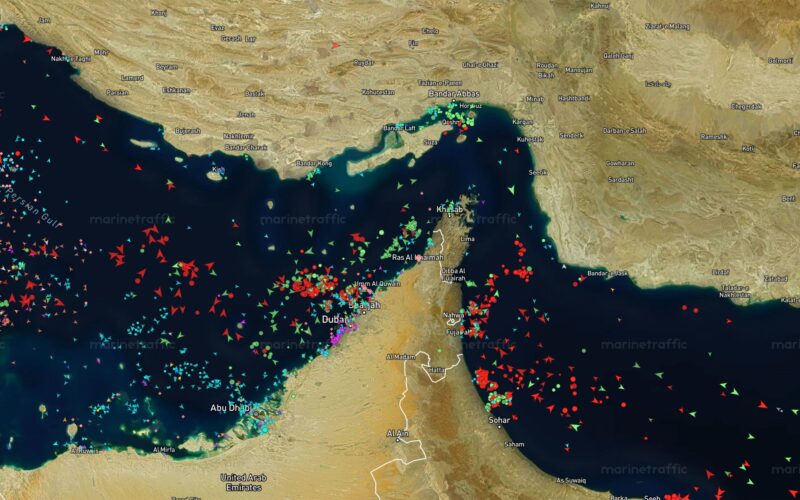
Iran’s Mine Campaign in Hormuz: The Threat, the Gaps, and Why Clearance Will Take Longer Than the Pentagon Admits
Iran has reopened naval mine warfare in the Strait of Hormuz for the first time since 1988, at a moment when the US forward-deployed mine countermeasures force is at its weakest point in 35 years. This brief sets out what is established, what is reported but not independently verified, and what remains analytical inference, drawing on primary US government sources, specialist defence press, and open-source intelligence.
Executive Summary
- US officials cited in CBS and CNN reporting say Iran began laying mines in the Strait of Hormuz in early March 2026, using at least Maham-3 and Maham-7 limpet mines. The reporting rests on a single chain of anonymous official sources.
- The initial field was described by those officials as “roughly a dozen” mines. Figures of 1,000 to 3,000 circulating in secondary defence-industry media have no primary source and should be treated as analytical speculation.
- CENTCOM states it destroyed 16 Iranian minelayers in March 2026. The Stimson Center assesses that Iran retains roughly 80 to 90 per cent of its small-boat minelayer capacity.
- The four Bahrain-based Avenger-class minesweepers were decommissioned on 25 September 2025 and shipped to Philadelphia in January 2026, leaving CENTCOM with no forward-deployed dedicated mine countermeasures hulls when the mining campaign began.
- USS Chief and USS Pioneer transited Singapore on 8 to 10 April 2026 en route to the CENTCOM area of responsibility. A reinforcement force is inbound, not in place.
- Roughly 20 million barrels per day of oil and around 20 per cent of global LNG transit Hormuz under normal conditions. Realistic pipeline bypass sits at about 2.6 million barrels per day, leaving some 17 million barrels per day of flow structurally locked to the Strait.
- Brent crude peaked above $127 per barrel. The International Energy Agency executed a 400-million-barrel reserves release on 11 March 2026, the largest in its history.
- The widely cited Iranian inventory of “more than 5,000 naval mines” traces to a single Defence Intelligence Agency assessment from 2019. Subsequent restatements across think-tank and Congressional Research Service material do not constitute independent corroboration.
01Topic Definition
Problem space. Naval mines as a weapon system deployed by Iran, through both the Islamic Republic of Iran Navy (IRIN) and the Islamic Revolutionary Guard Corps Navy (IRGCN), against commercial and military traffic in the Strait of Hormuz. Distinguished from adjacent threats, including anti-ship cruise and ballistic missiles, fast-attack craft, uncrewed surface vessels, and limpet attacks on specific hulls, except where integrated.
Scope.
- Geographic: Strait of Hormuz and immediate approaches; the Iranian coastline and islands of Qeshm, Larak, Hormuz, Hengam and Farsi; Omani Musandam territorial waters containing the Traffic Separation Scheme.
- Technical: Mine types, fuzes, delivery platforms, and the mine countermeasures systems intended to defeat them.
- Temporal: Historical baseline of 1987 to 1991 and the 2019 limpet incidents; current operational period from 28 February 2026 onwards, the start of the US–Iran conflict referred to in open reporting as Operation Epic Fury.
02Key Facts
Geography
The Strait runs roughly 167 km (90 nautical miles) in length, narrowing to about 39 km (21 nautical miles) between Iran and the Omani Musandam exclave, according to the US Energy Information Administration. The Traffic Separation Scheme consists of two two-nautical-mile lanes separated by a two-nautical-mile median, lying in Omani territorial waters. Navigable depths in the shipping lanes generally run between 60 and 100 metres.
Transit Volumes, 2024 to First Half of 2025
- Oil flow averaged around 20 million barrels per day in 2024, equivalent to roughly 20 per cent of global petroleum liquids consumption and 25 to 27 per cent of seaborne oil trade.
- LNG flow reached approximately 112 billion cubic metres in 2025, around 20 per cent of global LNG trade. Some 93 per cent of Qatari and 96 per cent of UAE LNG exports transit the Strait, per the International Energy Agency.
- Around 84 per cent of Hormuz crude and 83 per cent of Hormuz LNG went to Asian markets in 2024.
- Realistic bypass capacity, combining the Saudi East-West pipeline and the UAE ADCOP pipeline to Fujairah, stood at roughly 2.6 million barrels per day as of mid-2025.
Iranian Naval Structure and Mine Doctrine
Iran operates two parallel naval forces. Under the 2007 reorganisation, the IRGCN holds sole responsibility for the Persian Gulf, the IRIN covers the Gulf of Oman and the Caspian, and the Strait of Hormuz is shared between them. This arrangement is documented in the US Office of Naval Intelligence’s 2017 report Iranian Naval Forces: A Tale of Two Navies and the Defence Intelligence Agency’s 2019 Iran Military Power.
The 2017 ONI report identifies naval mine warfare as a critical component of IRGCN strategy in the Strait. The 2019 DIA report puts Iranian inventory at “more than 5,000 naval mines”, including contact and influence types.
A caveat matters here. Every subsequent 5,000 to 6,000 figure in think-tank and Congressional Research Service material traces back to that single DIA 2019 line, or to open-source extrapolation from it. Repetition is not corroboration, and the figure should be read as one assessment that has become the industry standard, not an independently verified count.
Iranian Mine Types Attested in the Government and Defence Record
- M-08. Soviet-pattern moored contact mine. Iranian use is confirmed against SS Bridgeton in July 1987 and matched by serial number to mines in the USS Samuel B. Roberts minefield in April 1988.
- Moored contact mines and bottom influence mines are attested in Iranian inventory in the 2019 DIA report.
- Limpet mines attributed to Iran have been recovered or photographed in multiple incidents, including Fujairah and the Gulf of Oman in 2019, with US official attribution to the IRGC.
Historical Incidents
- 24 July 1987: SS Bridgeton struck an Iranian M-08 mine about 13 nautical miles west of Farsi Island during the first Operation Earnest Will convoy.
- 21 September 1987: US forces captured the Iranian vessel Iran Ajr while it was actively laying mines. Ten additional mines were aboard.
- 14 April 1988: USS Samuel B. Roberts (FFG-58) struck a mine. Her keel was broken.
- 18 April 1988: Operation Praying Mantis was conducted in retaliation.
- February 1991: USS Tripoli and USS Princeton both struck Iraqi-laid mines in the northern Gulf during Desert Storm. Iraq had laid approximately 1,157 mines.
- May to June 2019: Limpet-mine attacks on six tankers near Fujairah and in the Gulf of Oman, attributed to the IRGC by US and allied governments.
MCM Force Changes Before the Current Conflict
The four forward-deployed Avenger-class minesweepers based at Manama, Bahrain (USS Devastator, Sentry, Dextrous, and Gladiator) were decommissioned in a ceremony on 25 September 2025, and transported to Philadelphia aboard M/V Seaway Hawk in January 2026. NAVCENT confirmed the transport; USNI Proceedings and The War Zone reported the decommissioning and relocation.
The Avenger class entered service from 1987 onward. The hulls are wooden with a fibreglass outer coating, designed for low magnetic and acoustic signature. The Littoral Combat Ship mine countermeasures mission package achieved Initial Operational Capability in March 2023. Its components, per General Dynamics Mission Systems and Navsea documentation, include the AN/AQS-20C towed sonar, the Knifefish uncrewed underwater vehicle, the Unmanned Influence Sweep System (UISS), the Airborne Laser Mine Detection System (ALMDS), and the AN/ASQ-235 Airborne Mine Neutralization System (AMNS) fitted to the MH-60S.
The Current Campaign
The following claims each carry a specific date and source. None should be read as independently verified unless stated.
US officials cited by CBS News on 7 March 2026 and CNN on 10 March 2026 said Iran began laying mines in the Strait of Hormuz in early March. CENTCOM publicly stated it destroyed 16 Iranian minelayers near the Strait in March 2026, releasing video footage; the fact of the CENTCOM statement is on the record, but independent battle-damage assessment is not available in open source.
Mine types identified in the current campaign, per CBS News in late March 2026 citing US officials, are the Iranian-manufactured Maham-3 and Maham-7 limpet mines. The same officials put the initial mine count at “roughly a dozen” to “less than a dozen” at that time. Higher figures of 1,000 to 3,000 mines circulating in secondary defence-industry outlets such as Army Recognition and MiGFlug have no primary source and appear to be analytical extrapolation from Iranian small-boat inventory and sortie capacity rather than reported fact.
USS Chief (MCM-14) and USS Pioneer (MCM-9) departed Sasebo and transited Singapore on 8 to 10 April 2026 en route to the CENTCOM area of responsibility, per USNI News reporting and ship-tracking OSINT from The War Zone and WarshipCam. On 11 April 2026, per a CENTCOM statement cited in Just Security on 13 April 2026, two Arleigh Burke-class destroyers transited the Strait of Hormuz during the ceasefire; the fact of the transit is established, its operational purpose is contested.
A Just Security piece from April 2026 describes Iran as having laid mines “haphazardly” without recording positions, attributing the claim to “new reporting” but naming no primary source. The assertion is consistent with IRGCN tradecraft but has not been independently verified. Multiple news outlets in April 2026, including The Christian Science Monitor, Stars and Stripes and CNN, describe the Strait as “effectively closed” to commercial traffic in the context of US blockade operations. As of 16 to 17 April 2026, those outlets indicate commercial transit is substantially suspended. No formal closure has been declared.
03Technical Breakdown
How Mines Function
Contact mines detonate on hull contact via horn or chemical igniter, and are defeatable in principle by mechanical sweep of the mooring cables.
Influence mines use magnetic, acoustic or pressure sensors, sometimes in combination. Fuzing can be programmable with ship-count or signature-match logic. This complicates sweep because operators cannot know when a mine will actuate without the programming parameters, a point made explicit in both the 2017 ONI report and the 2019 DIA assessment.
Rising mines combine a seabed-moored influence sensor with a rocket-propelled warhead. The EM-52, a Chinese export derivative of the T-1, has been attributed to Iranian inventory across multiple specialist sources, including H.I. Sutton’s Covert Shores. It has not been independently verified in the releasable US government record reviewed here.
Limpet mines are diver- or small-boat-placed directly on hulls. Their use by Iranian forces is an attested tactic from the 2019 Fujairah and Gulf of Oman incidents.
Iranian Mine-Type Roster
- M-08. Established in US Navy heritage records.
- Sadaf-01 and Sadaf-02. Reported by H.I. Sutton and specialist databases. Not independently verified in releasable US government text.
- Maham-2, a bottom influence mine. Reported in specialist OSINT.
- Maham-3 and Maham-7, limpet mines in current use. Reported by CBS News citing US officials.
- EM-52. Long-standing claim across OSINT and think-tank commentary. Not independently verified by a named US government document in the open record reviewed here.
- MDM-3 and MDM-6, Russian bottom mines said to be in Iranian inventory. OSINT only. Frequently repeated, provenance thin.
- MC-52, a non-magnetic bottom influence mine. Referenced in defence media. No primary source located in this pass.
- Fajr-5 multiple launch rocket system used to sow mines. Reported in Sutton, flagged by him as “reports”. Unverified.
Delivery Platforms
The IRIN operates three Kilo-class (Type 877EKM) submarines, confirmed in the 2019 DIA report. Current operational availability, following Iranian strikes on Bandar Abbas in the 2025 to 2026 window, is unclear. The IRIN also operates Ghadir-class midget submarines and the Fateh coastal submarine, commissioned in 2019 and claimed to be torpedo- and ASCM-capable.
IRGCN Ashoora small boats have been fitted with mine rails. Each carries at least one mine, according to the 2019 DIA assessment, with Stimson in April 2026 putting the figure at two to three mines per sortie. The IRGCN also maintains the Sepah Navy Special Force, a Takavar special-operations unit, according to Jane’s.
Detection Challenges
Programmable fuzes defeat “drive a sweep past it” tactics because operators cannot deterministically trigger the mine, per the 2017 ONI report. Non-magnetic shells, where present, defeat magnetic influence-sweep methods, a point made in USNI Proceedings in April 2026. Buried or proud seabed mines require high-resolution sonar, which is exactly the problem the Knifefish was designed to address, per General Dynamics and Navsea.
US MCM Capability and Limitations, April 2026
Total Avenger-class hulls remaining: seven, forward-deployed only at Sasebo, Japan, following the Bahrain decommissioning. Three Independence-variant Littoral Combat Ships, USS Canberra, USS Tulsa and USS Santa Barbara, are the currently deployable platforms carrying the MCM mission package, per USNI and The War Zone reporting in April 2026.
A US Navy Mine Countermeasures Technical Division briefing delivered in the UK approximately nine months before the current campaign, and reportedly obtained by Hunterbrook Media, described unreliable uncrewed vehicles, single-point failures, and sonar limitations. The briefing is attributed to a specific primary document; the document itself cannot be independently verified here.
The MH-53E Sea Dragon airborne mine countermeasures platform is down to a single remaining squadron, with the airframe planned for retirement by end 2027.
Clearance Requirement
The Washington Institute’s historical assessment, now older, put the requirement for clearing Hormuz at up to 16 mine countermeasures vessels. It is widely cited as still indicative, though dated. Retired Admiral James Stavridis, writing in March 2026, put the force requirement for an effective blockade posture at two carrier strike groups and roughly a dozen destroyers. Both are analytical judgements rather than official requirements.
04Historical Pattern Analysis
The Gulf has seen three deliberate minelaying campaigns within living memory: Iran from 1987 to 1988, Iraq from 1990 to 1991, and Iran again in 2026. Iran’s use of mines was directly anticipated in a declassified 2009 CIA assessment and in the 2017 ONI report, both referenced by the Stimson Center in April 2026. The CIA assessment was not located in primary form in this pass.
Tactical evolution is clear across the three episodes. The 1987 to 1988 campaign centred on surface-vessel deployment of Soviet-pattern contact mines, exemplified by the Iran Ajr. The 2019 incidents marked a shift to limpet attacks on specific hulls, at anchor or under way. The 2026 campaign, per open reporting, uses dispersed small-craft emplacement. The specific scale and pattern of the 2026 campaign remain reported rather than confirmed.
05Vulnerability Mapping
Chokepoint Geometry
The Strait narrows to 21 nautical miles at its tightest point, with two two-nautical-mile TSS lanes separated by a two-nautical-mile median, all within Omani waters. Pre-2026 daily commercial transit ran at roughly 100 to 138 vessels, 60 to 70 per cent of which were oil and gas carriers, per Lloyd’s List data as aggregated by Visual Capitalist and Speed Commerce.
Infrastructure Dependency
No alternative sea route exists for the majority of Qatari and Emirati LNG, per the IEA. Pipeline bypass of roughly 2.6 million barrels per day runs against 20 million barrels per day of flow, leaving some 17 million barrels per day structurally locked to Hormuz. The Saudi East-West pipeline routes to Yanbu, but onward Asian shipment still requires Bab el-Mandeb transit, re-concentrating rather than dispersing risk.
Jebel Ali in the UAE handles around 15.5 million TEU per year and is the primary Middle East transshipment hub, according to Drewry port statistics. A figure circulating in defence-industry media, that roughly one-third of global fertiliser trade (sulfur, ammonia) transits Hormuz, does not have a clearly cited primary source and should be treated as analytical extrapolation until one is named.
The Operational MCM Gap
Coalition mine countermeasures hulls available for Hormuz clearance sit below the Washington Institute’s older assessed requirement of around 16. The current deployable figure, roughly seven Avengers in existence and three Littoral Combat Ships with the mine countermeasures package, is consistently reported across USNI, The War Zone and Hunterbrook. The LCS mine countermeasures package has not previously been tested in a live contested minefield.
06Emerging Trends
What Is Changing
Minelaying is being dispersed across many small platforms, making kinetic interdiction of the minelayers themselves partial at best. CENTCOM destroyed 16 minelayers per its own statement; Stimson estimates Iran retains roughly 80 to 90 per cent of its small-boat minelayer capacity, a figure that has become the working assumption in open analysis.
Programmable fuzing and, in more recent designs, non-magnetic construction reduce the effectiveness of conventional sweep, per the 2017 ONI report and USNI Proceedings in April 2026.
Unrecorded emplacement as a deliberate tactic extends effective closure time. This point appears in Just Security in April 2026, attributed to “new reporting” rather than a named primary source, and remains analytical inference pending independent confirmation.
Autonomous mine delivery via uncrewed surface vessel is plausible and frequently discussed, but no confirmed Iranian USV minelaying event has surfaced in open reporting.
What Is Not Changing
IRGCN asymmetric doctrine has held stable from at least the 2017 ONI assessment through the 2019 DIA report and into current open reporting. Doctrinal continuity is the feature, not the exception.
07Conflicting Views and Uncertainty
Scale of the Current Minefield
Estimates vary by two orders of magnitude. The low bound, from US officials quoted in CBS in late March 2026, is “roughly a dozen”. The high bound, the 1,000 to 3,000 figure in defence-industry media, has no primary source and is likely analytical extrapolation. Retired Admiral Stavridis, writing in April 2026, offered a different frame: that US and Israeli strikes had destroyed roughly 90 per cent of Iran’s mines, though Iran retains the capacity to lay more.
EM-52 Capital-Ship Lethality
The EM-52 is described in defence-industry and specialist OSINT material as a theoretical threat to carriers. A 2012 Strauss Center assessment argued that hydrodynamic effects on very large crude carriers at Gulf depths would limit damage from rising-mine bubble dynamics, though warship effects are different. No confirmed EM-52 combat hit exists in the open record. The assessment across the category remains analytical rather than empirical.
Kilo Submarine Operational Availability
All open-source claims of poor Iranian Kilo readiness pre-date 2021. Current status following strikes on Bandar Abbas in the 2025 to 2026 window is not addressed in material accessed here. Any specific availability claim at this point is inference.
The “Hard to Close for Long” Legacy View
Britannica and the Strauss Center historically argued that the depth, width and TSS geometry of Hormuz limit Iran’s ability to sustain closure. Current reporting indicates commercial transit has been substantially suspended since late February 2026. The legacy view undervalued insurance and risk-pricing mechanisms as a closure vector, which look in retrospect to be the decisive lever rather than the geography itself.
Whether Iran Recorded Mine Positions
Just Security in April 2026 references “new reporting” that Iran did not. No primary source is named. The claim remains inference.
08Key Data Points and Metrics
Geography
- Strait length: 104 miles / 167 km.
- Narrowest width: 21 nautical miles / 39 km.
- Shipping-lane depths: 60 to 100 metres.
- TSS: two two-nautical-mile lanes with a two-nautical-mile median.
Transit Volumes
- Oil: approximately 20 million barrels per day, 2024.
- LNG: 112 bcm in 2025.
- Qatari LNG through Hormuz: 93 per cent. UAE LNG: 96 per cent.
- Pipeline bypass: approximately 2.6 million barrels per day.
Historical Data Points
- Bridgeton mine strike, 24 July 1987, about 13 nautical miles west of Farsi Island.
- Roberts mine strike, 14 April 1988.
- Iraqi mine campaign, 1990 to 1991: 1,157 mines laid; USS Tripoli and USS Princeton struck.
Iranian Inventory
“More than 5,000 naval mines” per the 2019 DIA assessment. Higher 2025 figures are restatements of the same line. Independent corroboration is not available.
MCM Force, April 2026
- Avenger-class hulls remaining: seven.
- Independence-class LCSs with mine countermeasures package: three.
- Washington Institute historical clearance requirement: approximately 16.
Economic Effects, Early to Mid-March 2026
- IEA reserves release on 11 March 2026: 400 million barrels, the largest in its history.
- Brent peak: above $127 per barrel, per USNI Proceedings in April 2026.
- Equity markets in the EU, India, Japan, South Korea and the UAE: down 8 to 17 per cent between 28 February and the USNI publication window.
09Temporal Relevance Filter
- ONI 2017 and DIA 2019: doctrinally still indicative; specific hardware counts dated but repeated in CRS 2026.
- 2009 CIA mine-strategy assessment: dated but validated by 2026 conduct.
- Strauss Center and Britannica “hard to close” analysis: dated, operationally superseded.
- Kilo availability assessments: dated pre-2021; current state unknown.
- Avenger-class Bahrain basing: superseded by the September 2025 decommissioning and January 2026 transport to Philadelphia.
- LCS mine countermeasures package IOC, March 2023: current.
- Washington Institute “16 hulls” clearance estimate: older, indicative only.
- All 2026 operational claims: status changes week to week; each carries a specific date in the text.
10Source Log
Government and Primary
- US Energy Information Administration, Strait of Hormuz / World Oil Transit Chokepoints, 2024, 2025 and March 2026
- US Energy Information Administration, Amid regional conflict, the Strait of Hormuz remains critical oil chokepoint, 2025
- International Energy Agency, Strait of Hormuz briefing, February 2026
- US Office of Naval Intelligence, Iranian Naval Forces: A Tale of Two Navies, February 2017
- US Defence Intelligence Agency, Iran Military Power, 2019
- US Congressional Research Service, Iran Conflict and the Strait of Hormuz: Impacts on Oil, Gas, and Other Commodities (R45281), March 2026
- US Congressional Research Service, U.S. Conflict with Iran (R48887), March 2026
- US Department of Defence, Conduct of the Persian Gulf War, Chapter VII: The Maritime Campaign
- US Naval History and Heritage Command, USS Samuel B. Roberts (FFG-58) reference page
- CENTCOM public statements, March to April 2026
- NAVAIR public information on MH-53E and airborne mine countermeasures
Defence and Think Tank
- USNI Proceedings, “The Crisis in Mine Countermeasures,” April 2026
- USNI Naval History, “The Tanker War,” June 2025
- USNI Proceedings, “Iran’s Gray Zone Navy,” February 2020
- Stimson Center, Five Things to Know About Iranian Minelaying, April 2026
- Atlantic Council and AGSI, Gulf Maritime Security: Balancing Partnership and Flexibility, February 2026
- Middle East Council on Global Affairs, Navigating Rocky Waters, December 2025
- Gulf International Forum, Examining Changing Saudi and Emirati Naval Capabilities, 2024
- Just Security, Mined and Blockaded, April 2026
- Washington Institute for Near East Policy, Haghshenass, Iran’s Asymmetric Naval Warfare, Policy Focus 87
Academic and Policy
- Strauss Center for International Security and Law, Strait of Hormuz reference pages (2012 baseline)
- Naval Postgraduate School / Defence Technical Information Centre, Use of Cooperative Unmanned Systems for Mine Countermeasures
Industry
- General Dynamics Mission Systems, Knifefish UUV documentation
- Naval Technology, Knifefish UUV project file
- Lloyd’s List, Vortexa and Kpler tanker tracking data, as aggregated by the EIA and IEA
Open-Source Intelligence
- H.I. Sutton / Covert Shores, Guide to Iran’s Naval Mines, March 2026 update
- Hunterbrook Media, Demining Hormuz, April 2026
- The War Zone, January to April 2026
- USNI News
- WarshipCam AIS imagery and ship tracking
Reporting Citing Official Sources
- CBS News, late March 2026, on Maham-3 and Maham-7 in the current campaign
- CNN, 10 March 2026, on the initial mining reports
- Stars and Stripes and The Christian Science Monitor, April 2026, on blockade operations
- Navy Times and Military Times, March 2026, on mine countermeasures asset movements
11Load-Bearing Claims Audit
The ten claims on which this brief most depends, with the evidence supporting each.
- Iran’s large naval mine inventory. The figure of “more than 5,000” mines, including contact and influence types, rests on the DIA 2019 assessment, restated by CRS in 2026. Single-source lineage; the assessment itself is established, the independently verified count is not.
- Naval mine warfare as IRGCN doctrine. Documented in the 2017 ONI report, restated by Stimson and USNI in 2026. Doctrinal posture is established.
- Roughly 20 million barrels per day of oil and around 20 per cent of global LNG transit the Strait under 2024 to 2025 baseline conditions. EIA and IEA data. Established.
- Approximately 2.6 million barrels per day of realistic pipeline bypass against 20 million barrels per day of flow, per EIA 2025. Established.
- Iran began mining the Strait in early March 2026, using at least Maham-3 and Maham-7 limpet mines. CBS News late March 2026 and CNN on 10 March 2026, citing US officials. Single reporting chain to anonymous officials; no primary declassified document in the open record reviewed here.
- CENTCOM destroyed 16 Iranian minelayers in March 2026. CENTCOM public statement with video. The fact of the statement is established; independent battle-damage assessment is not available.
- The Bahrain-based Avenger-class decommissioning. Four hulls decommissioned on 25 September 2025, transported to Philadelphia in January 2026, leaving no forward-deployed dedicated minesweepers in CENTCOM AOR at the start of the March 2026 mining campaign. Per USNI Proceedings April 2026, corroborated by The War Zone and a NAVCENT public statement on the transport. Established.
- The LCS mine countermeasures package reached IOC in March 2023, and its uncrewed systems have documented reliability issues including UUV endurance and bandwidth problems. USNI for the IOC date. The reliability issues are sourced to a US Navy briefing reportedly obtained by Hunterbrook Media in April 2026; the briefing itself cannot be independently verified here.
- Bridgeton, Roberts and Iran Ajr. The 24 July 1987 Bridgeton strike, the 14 April 1988 Roberts strike, and the 21 September 1987 capture of Iran Ajr mid-minelaying. US Navy heritage records and USNI Naval History 2025. Established.
- Hormuz operating below pre-conflict transit since late February 2026, with the IEA executing a 400-million-barrel reserves release on 11 March 2026, the largest in its history. The IEA release is a primary-source event. The “substantially closed” status is consistent across multiple April 2026 reports but does not constitute a formal closure declaration.